Cornerstone knowledge hub
The Four Astrological Elements: Fire, Earth, Air and Water
A clear guide to the four zodiac elements, their history, twelve signs, modalities, seasonal pattern, chart balance, relationship dynamics, myths and scientific context.
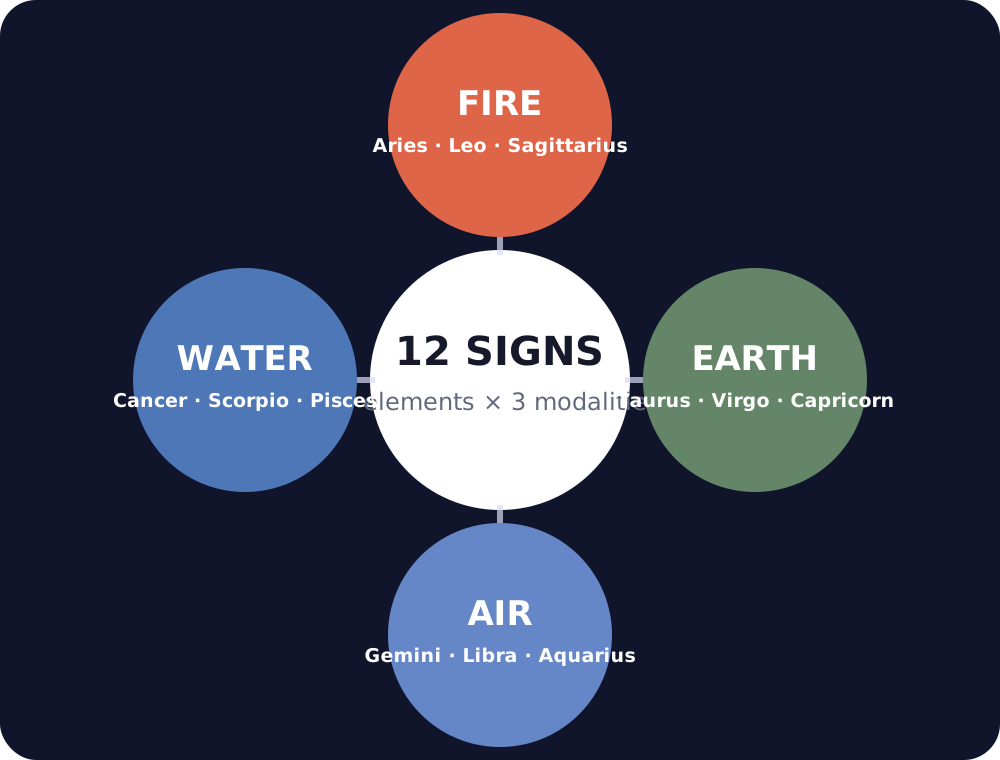
- Fire, earth, air and water are symbolic historical categories, not chemical substances inside a chart.
- Each element contains three signs with different modalities.
- Elements describe a field of expression; modalities describe movement.
- Element compatibility is a relationship dynamic, not a fixed verdict.
- A chart does not need equal elements to be healthy or complete.
What the four elements mean
Fire, earth, air and water are the four symbolic families of the Western zodiac. Each group contains three signs. The elements do not describe literal substances inside a person, and they are not modern scientific categories. They are an inherited language for organizing themes such as motivation, practicality, thought and feeling.
The system becomes most useful when it is structural. An element answers what kind of experience is emphasized? A modality answers how does the sign move? Combining four elements with three modalities produces the twelve signs without duplication.
Where the four-element model came from
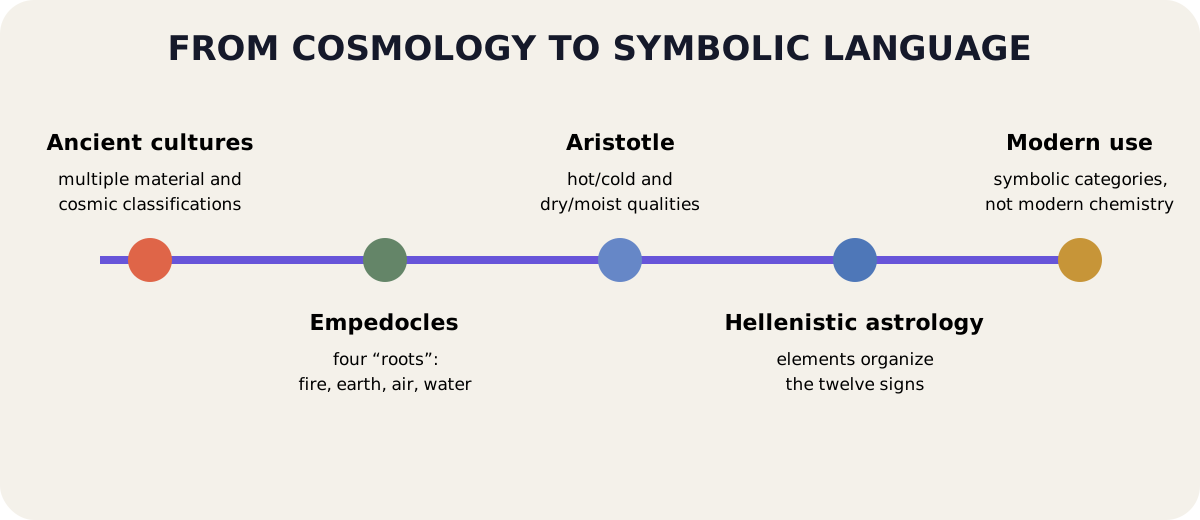
Many ancient cultures classified matter and cosmic processes in different ways. In fifth-century BCE Greek philosophy, Empedocles clearly described four enduring “roots” associated with fire, earth, air and water, moved by the forces he called Love and Strife. Aristotle later systematized element theory through paired qualities such as hot and cold, dry and moist.
These ideas influenced philosophy, medicine and later Hellenistic astrology. Astrology eventually grouped the twelve signs into four triplicities. The meanings continued to evolve through medieval, Renaissance and modern traditions.
Historical continuity does not make the theory modern science. The value of the element system today is interpretive and educational: it shows how astrologers classify signs and compare patterns.
The four elements at a glance
| Element | Signs | Core field | Typical strength | Growth theme |
|---|---|---|---|---|
| Fire | Aries, Leo, Sagittarius | Motivation, vitality, expression | Initiative | Pacing and patience |
| Earth | Taurus, Virgo, Capricorn | Material reality, craft, stability | Practical application | Flexibility |
| Air | Gemini, Libra, Aquarius | Ideas, language, relationship | Perspective and exchange | Grounding |
| Water | Cancer, Scorpio, Pisces | Feeling, memory, bonding | Connection and sensitivity | Boundaries |
Fire signs: Aries, Leo and Sagittarius
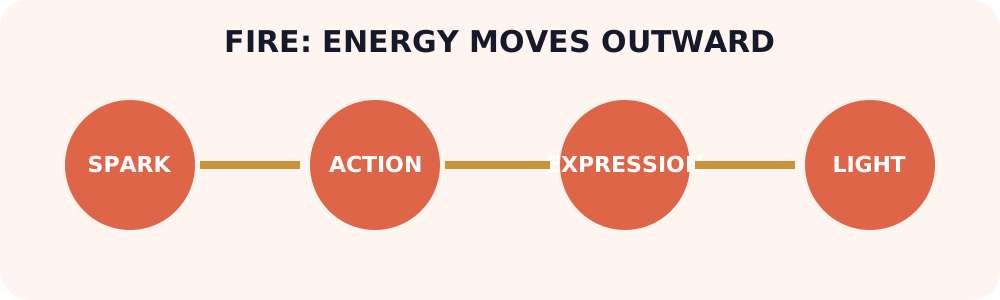
Fire symbolizes animation: the impulse to act, create, risk, explore or express. Its direction is often described as outward because fire turns inner conviction into visible movement.
Aries: cardinal fire
Aries initiates. Fire appears as immediacy, courage and the first movement into a new cycle.
Leo: fixed fire
Leo sustains. Fire appears as creative continuity, presence and the desire to keep a meaningful flame alive.
Sagittarius: mutable fire
Sagittarius adapts. Fire appears as exploration, belief, candid exchange and movement toward a wider horizon.
Common imbalance: abundant fire can become impatience, overextension or burnout. Low fire may feel like hesitation or difficulty mobilizing. Neither is a verdict; context and skills matter.
Earth signs: Taurus, Virgo and Capricorn
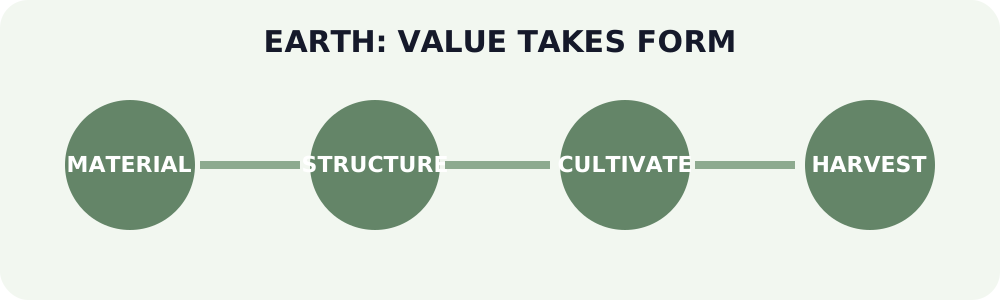
Earth symbolizes form, consequence and the material conditions that allow an idea to endure. Its strengths include steadiness, craft, measurement and the ability to work within limits.
Taurus: fixed earth
Taurus sustains resources, embodied value and continuity.
Virgo: mutable earth
Virgo adapts through refinement, skill, maintenance and useful detail.
Capricorn: cardinal earth
Capricorn initiates structure, responsibility and long-range plans.
Common imbalance: abundant earth can become rigidity or excessive focus on measurable results. Low earth may show up as difficulty with routines, budgeting or follow-through.
Air signs: Gemini, Libra and Aquarius
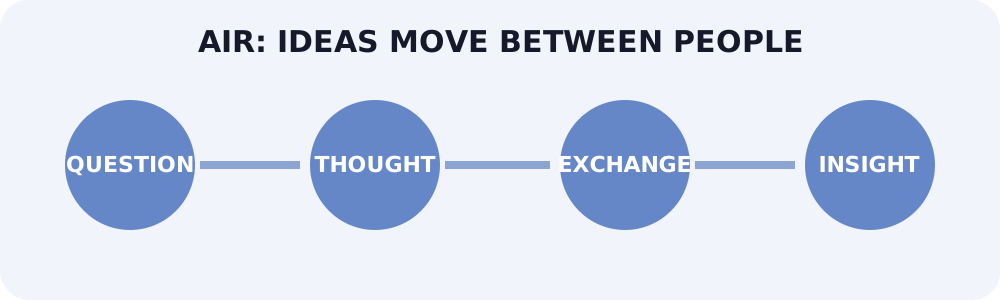
Air symbolizes relationship between points: ideas linked through language, people linked through conversation, and systems linked through comparison. Air creates distance that can improve perspective.
Gemini: mutable air
Gemini adapts through questions, information and translation between topics.
Libra: cardinal air
Libra initiates through comparison, dialogue, relationship and social coordination.
Aquarius: fixed air
Aquarius sustains principles, networks and conceptual systems.
Common imbalance: abundant air can become detachment, overthinking or constant abstraction. Low air may make language, perspective-taking or social exchange require more deliberate effort.
Water signs: Cancer, Scorpio and Pisces
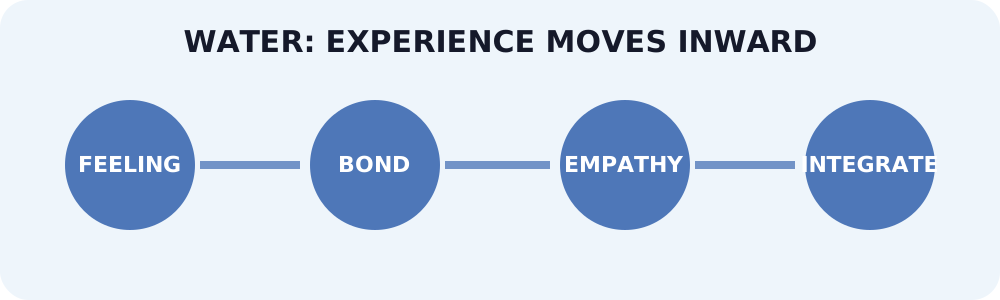
Water symbolizes subjective experience: feeling, memory, instinct, vulnerability and the bonds that make events personally meaningful. Water’s strength is responsiveness to context that cannot always be reduced to a rule.
Cancer: cardinal water
Cancer initiates protection, care and belonging.
Scorpio: fixed water
Scorpio sustains emotional focus, loyalty, trust and transformation.
Pisces: mutable water
Pisces adapts through empathy, imagination, integration and release.
Common imbalance: abundant water can become overwhelm or blurred boundaries. Low water may make emotional language less immediate, though care can still be expressed through action, duty or thought.
How the elements differ
| Question | Fire | Earth | Air | Water |
|---|---|---|---|---|
| What gets attention? | Possibility and action | Reality and resources | Ideas and relationships | Meaning and feeling |
| Decision tendency | Immediate conviction | Practical evidence | Comparison and logic | Emotional context |
| Communication strength | Inspiration | Specificity | Explanation | Empathy |
| Typical blind spot | Pacing | Adaptability | Embodiment | Boundaries |
| Useful question | What can begin? | What will work? | What connects? | What matters? |
No element owns a human ability. An earth sign can be imaginative, a water sign can be analytical, an air sign can be passionate and a fire sign can be patient. The element identifies a symbolic emphasis, not a limit.
How elements repeat through the zodiac
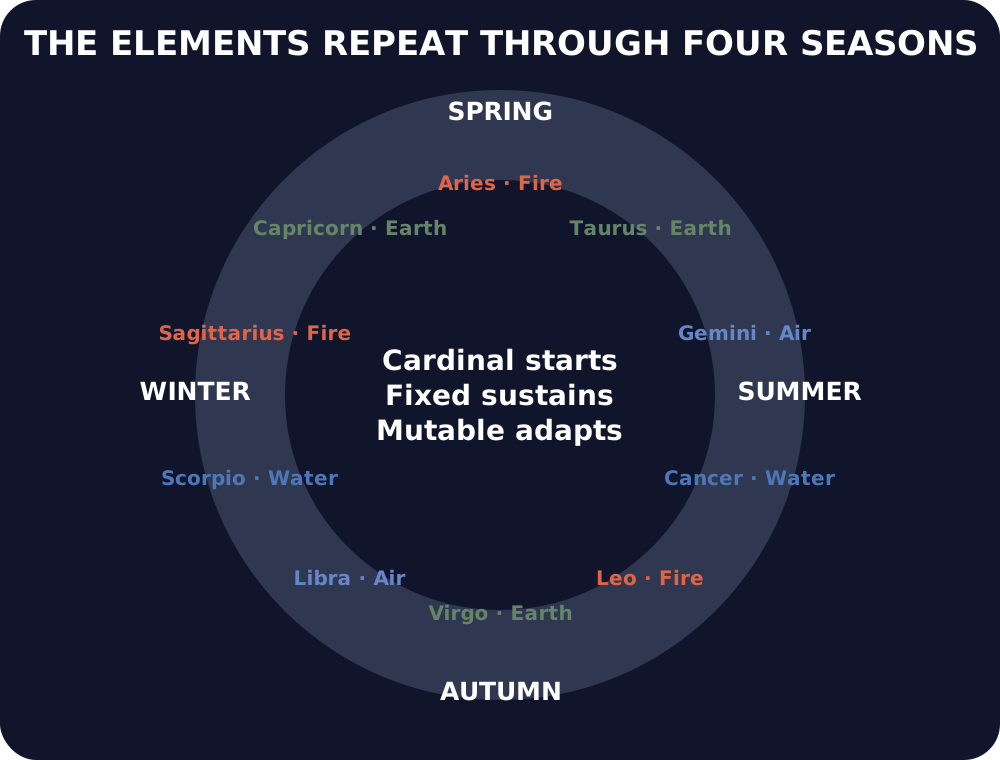
The zodiac repeats fire, earth, air and water while modalities repeat cardinal, fixed and mutable. This creates a sequence in which each season begins, stabilizes and transitions through different elements.
Spring moves from Aries fire to Taurus earth to Gemini air. Summer moves from Cancer water to Leo fire to Virgo earth. Autumn moves from Libra air to Scorpio water to Sagittarius fire. Winter moves from Capricorn earth to Aquarius air to Pisces water.
The pattern is more useful than memorizing personality adjectives because it shows why neighboring signs differ and why signs of the same element have different jobs.
Elements and modalities
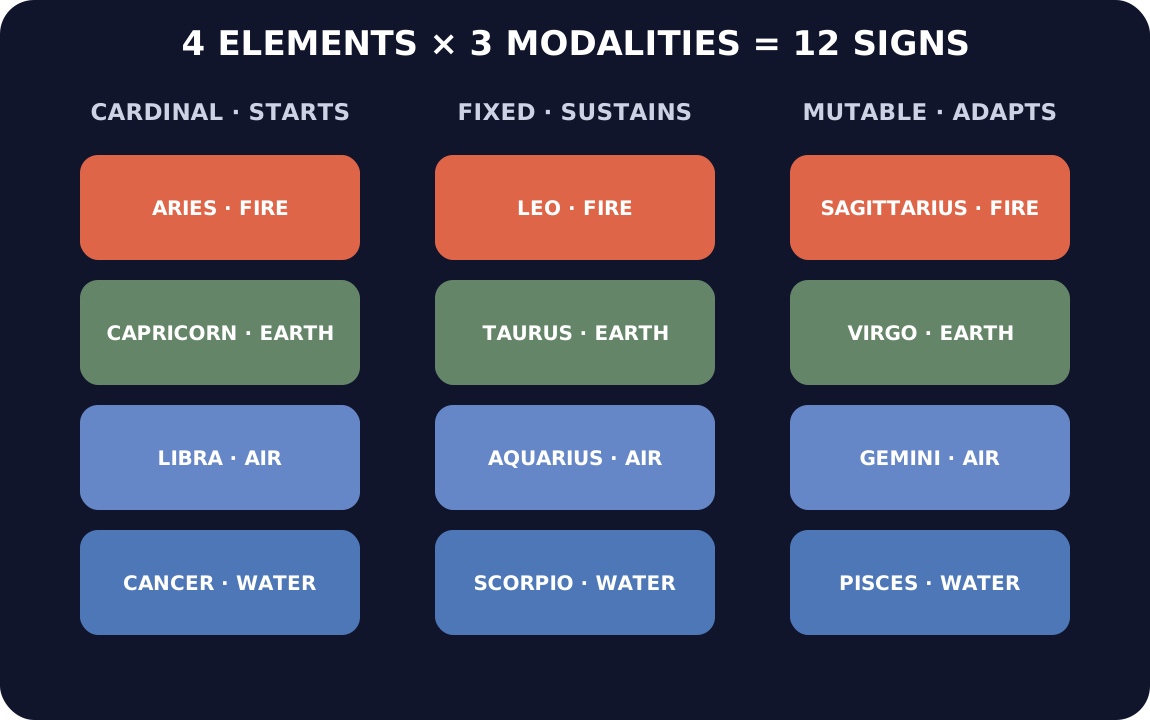
Every sign has exactly one element and one modality. The element supplies the symbolic field; the modality supplies movement.
- Cardinal starts: Aries, Cancer, Libra, Capricorn.
- Fixed sustains: Taurus, Leo, Scorpio, Aquarius.
- Mutable adapts: Gemini, Virgo, Sagittarius, Pisces.
Read the complete modalities guide to understand this second axis of the zodiac.
Elements and relationship dynamics
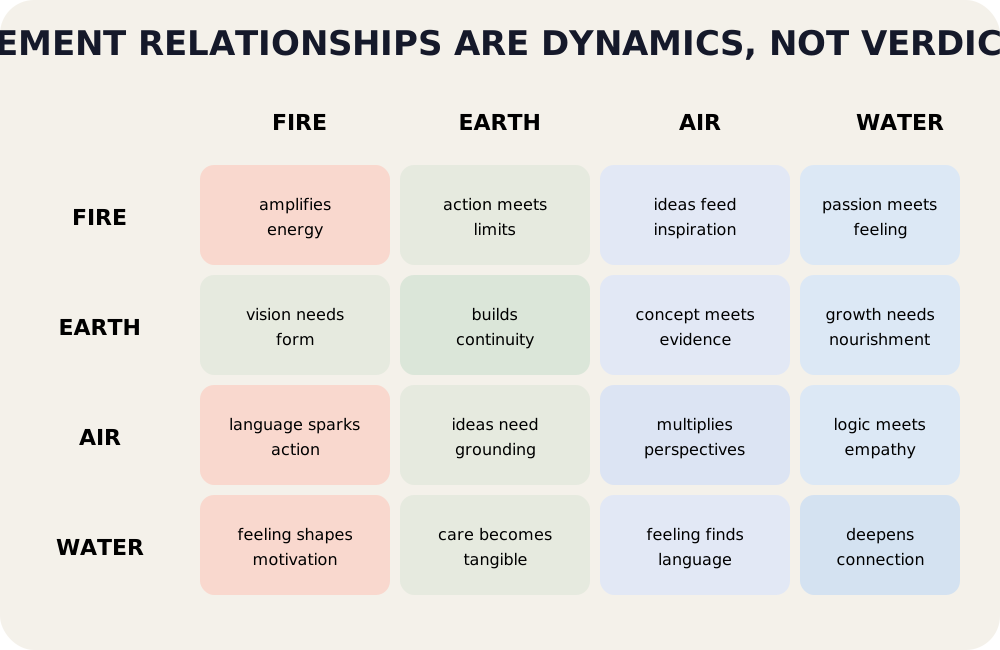
Traditional compatibility shortcuts say fire and air support one another, while earth and water support one another. That can be a useful first metaphor: air can feed fire, water can nourish earth. But the same pairings can also magnify imbalance, and “challenging” combinations can produce highly effective complementarity.
Fire and earth negotiate speed versus durability. Fire and water negotiate intensity versus sensitivity. Earth and air negotiate evidence versus possibility. Air and water negotiate explanation versus emotional context.
Relationship quality cannot be predicted from Sun-sign elements. Complete charts, communication, attachment patterns, circumstances and behavior matter much more.
Element balance in a birth chart
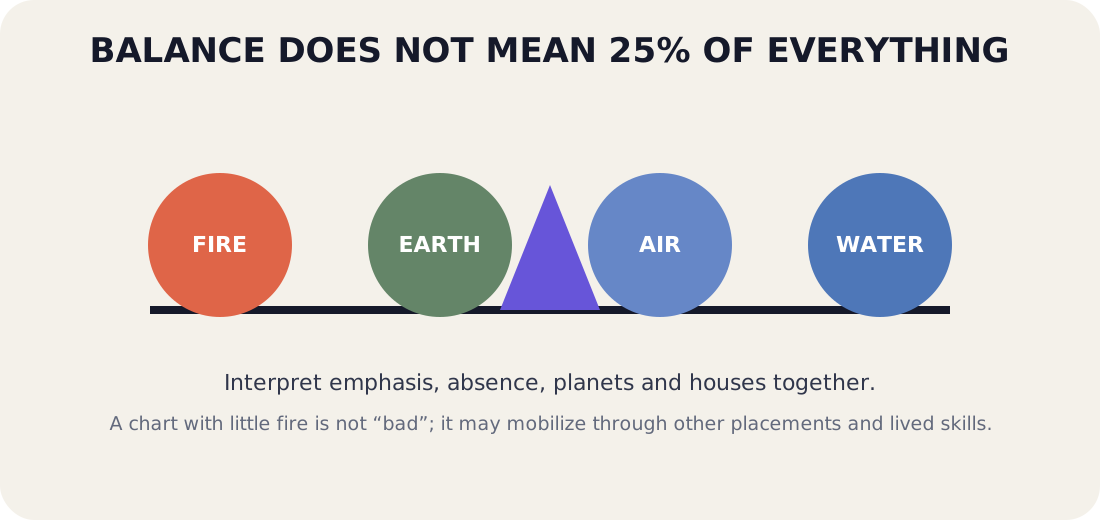
Astrologers often count the elements occupied by the Sun, Moon, planets and Ascendant. Some methods weight the Sun, Moon and chart ruler more heavily. There is no single universal scoring system.
A strong element may show a familiar mode of operating. A low or absent element may describe a function that is less automatic, delegated to other people or intentionally developed. It should not be described as defective.
Element balance is only one layer. A planet’s house, aspects, dignity, rulership and the person’s actual history can be more important than a simple count.
Common element myths
| Myth | Better explanation |
|---|---|
| Fire signs are angry. | Fire symbolizes vitality and outward expression; anger is not a sign diagnosis. |
| Earth signs are boring. | Earth emphasizes form and craft, which can support pleasure, mastery and innovation. |
| Air signs have no feelings. | Air emphasizes processing through ideas and language, not emotional absence. |
| Water signs cry constantly. | Water emphasizes subjective and relational awareness, not one style of display. |
| Same-element couples always work. | Familiarity can help, but similarity can also magnify shared blind spots. |
| A missing element is a flaw. | It is one interpretive pattern and can be expressed through other chart factors or learned skills. |
Scientific and historical perspective
Empedocles’ four roots belonged to ancient natural philosophy, not to modern chemistry. Modern chemical elements are defined by atomic number. Air is a mixture of gases, water is a compound, earth is a broad material category and fire is a process of combustion rather than a substance.
Astronomy defines the ecliptic as the plane of Earth’s orbit and the Sun’s apparent annual path. The zodiac signs used in tropical astrology are twelve equal sections of that coordinate framework. The International Astronomical Union defines constellations separately as bounded regions of sky.
No accepted scientific evidence demonstrates that astrological elements cause personality. Zodiac Calendar therefore presents element meanings as historical and interpretive traditions while using scientific sources for astronomy and physical claims.
Frequently asked questions
What are the four zodiac elements?
Fire, earth, air and water are four symbolic categories used to organize the twelve zodiac signs.
Which zodiac signs are fire signs?
Aries, Leo and Sagittarius are fire signs.
Which zodiac signs are earth signs?
Taurus, Virgo and Capricorn are earth signs.
Which zodiac signs are air signs?
Gemini, Libra and Aquarius are air signs.
Which zodiac signs are water signs?
Cancer, Scorpio and Pisces are water signs.
Are astrological elements the same as chemical elements?
No. The astrological elements come from ancient philosophical and symbolic traditions, not modern chemistry.
Where did the four-element idea come from?
Empedocles clearly formulated four roots—fire, earth, air and water—in fifth-century BCE Greek philosophy, building on older cosmological traditions.
Did Aristotle invent the four elements?
No. Aristotle developed and systematized earlier element theory, including qualities such as hot, cold, dry and moist.
Why does astrology use four elements?
The four elements provide a repeating symbolic classification that groups three signs with related themes.
How do elements differ from modalities?
Elements describe symbolic type or field; modalities describe whether a sign starts, sustains or adapts.
What is a fire sign?
A fire sign is traditionally associated with motivation, vitality, expression and inspiration.
What is an earth sign?
An earth sign is traditionally associated with material reality, stability, craft and practical application.
What is an air sign?
An air sign is traditionally associated with ideas, communication, comparison and social exchange.
What is a water sign?
A water sign is traditionally associated with feeling, intuition, memory, bonding and subjective experience.
Is one element stronger than the others?
No. Each element describes different functions and can be expressed constructively or unconstructively.
Sources and further reading
- Stanford Encyclopedia of Philosophy — Empedocles — historical analysis of the four roots and Love and Strife.
- International Astronomical Union — The Constellations — official definition of constellations as bounded sky regions.
- NASA — Plane of the Ecliptic — the plane of Earth’s orbit and the Sun’s apparent annual path.
Editorial note: This page separates historical philosophy, astronomical facts and astrological interpretation. Element meanings are not presented as scientifically demonstrated personality causes.