Cornerstone guide
The Three Astrological Modalities: Cardinal, Fixed and Mutable
A complete visual guide to how the zodiac’s three modalities organize beginnings, stability and transition—and how every modality combines with all four elements.
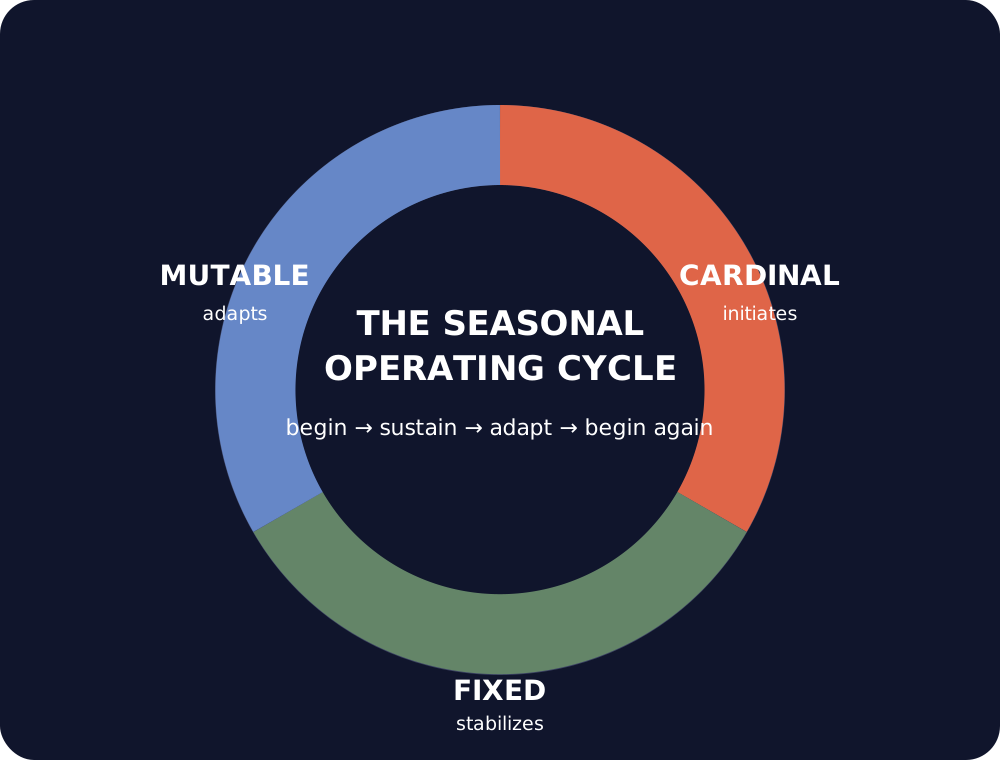
- Every zodiac sign belongs to one of three modalities.
- Cardinal signs initiate, fixed signs sustain and mutable signs adapt.
- Each modality contains one fire, earth, air and water sign.
- Element plus modality creates each sign’s unique structural combination.
- Modality is a historical symbolic framework, not a scientifically proven personality system.
What are the three modalities?
Modalities are a structural classification used in Western astrology. Every sign belongs to one of three groups: cardinal, fixed or mutable. The categories describe a sign’s symbolic operating style inside a cycle.
The simplest mental model is: cardinal begins, fixed sustains and mutable adapts. This is not a ranking. A healthy cycle needs all three roles. Beginning without sustaining produces abandoned starts; sustaining without adapting produces rigidity; adapting without direction produces endless revision.
Modalities are also called qualities or quadruplicities. “Quadruplicity” refers to the four signs in each group.
Why three modalities exist
The tropical zodiac is organized around four seasons. Each season contains three signs: one at the beginning, one in the middle and one during the transition to the next season. Those three seasonal roles became the basis for the modality system.
Cardinal
Opens a season and creates movement.
Fixed
Occupies the middle and consolidates what has begun.
Mutable
Closes the season and prepares the next cycle.
The seasonal explanation is especially clear in tropical astrology, which anchors signs to equinoxes and solstices. It is a symbolic interpretation of measurable seasonal stages, not scientific proof of personality effects.
Historical development and terminology
Ancient and Hellenistic astrologers grouped signs by several repeating structures, including elements, genders and seasonal qualities. The modality groups became known through terms corresponding to moveable or tropical, fixed and double-bodied signs. Modern English commonly uses cardinal, fixed and mutable.
The vocabulary changed across languages and periods, but the underlying structure remained stable: four signs start seasonal quarters, four occupy their centers and four complete transitions.
Cardinal signs: creating direction
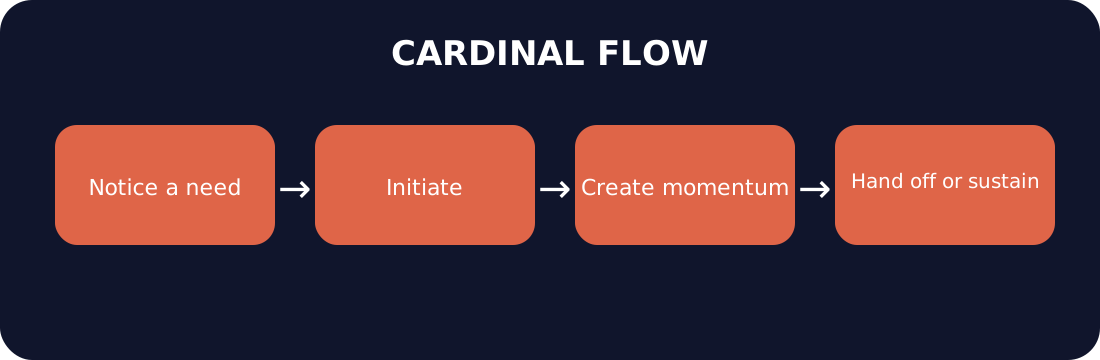
Cardinal signs initiate. Their symbolic strength is identifying a need for movement and creating direction. They are associated with beginnings, leadership, decisions and the willingness to disturb inertia.
Aries
Cardinal Fire
actionCancer
Cardinal Water
protectionLibra
Cardinal Air
relationshipCapricorn
Cardinal Earth
structureCardinal strengths
Initiative, direction, mobilization, willingness to begin and responsiveness to new conditions.
Cardinal growth themes
Completion, collaboration, patience, delegation and allowing other people to influence the plan.
Cardinal does not mean identical leadership. Aries begins through direct action, Cancer through care and protection, Libra through social or relational movement, and Capricorn through structure and responsibility.
Fixed signs: sustaining and deepening
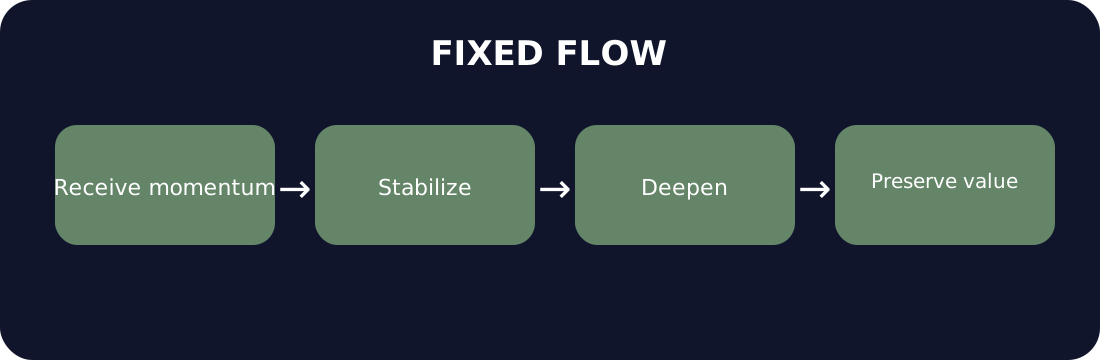
Fixed signs sustain. Their symbolic strength is concentrating energy, developing mastery and protecting continuity. They are associated with the middle of seasons, when the seasonal quality is most established.
Taurus
Fixed Earth
stabilityLeo
Fixed Fire
creative vitalityScorpio
Fixed Water
depthAquarius
Fixed Air
principleFixed strengths
Persistence, loyalty, concentration, continuity, endurance and the ability to protect value over time.
Fixed growth themes
Flexibility, releasing sunk costs, hearing new evidence and distinguishing commitment from resistance.
Fixed does not mean static in every context. Taurus preserves material stability, Leo sustains expression, Scorpio maintains emotional or strategic commitment, and Aquarius holds ideas or systems.
Mutable signs: adapting and transitioning
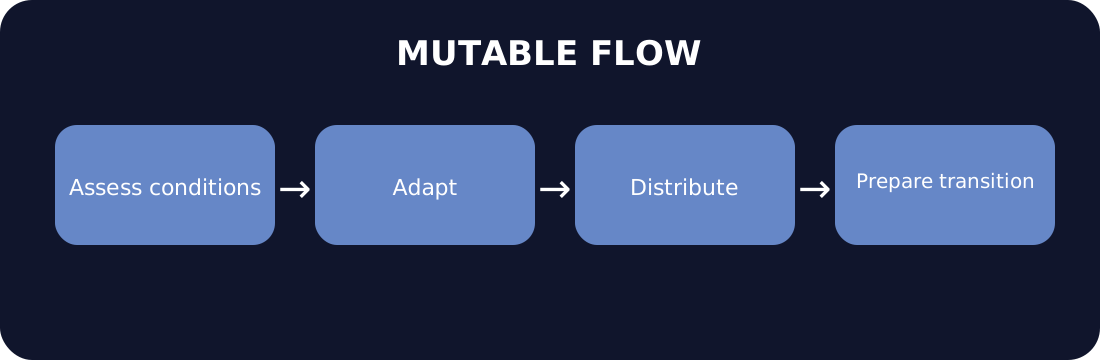
Mutable signs adapt. Their symbolic strength is reading changing conditions, translating between perspectives and preparing a cycle for completion or transition.
Gemini
Mutable Air
informationVirgo
Mutable Earth
refinementSagittarius
Mutable Fire
perspectivePisces
Mutable Water
integrationMutable strengths
Learning, flexibility, translation, revision, responsiveness and the ability to work across boundaries.
Mutable growth themes
Commitment, prioritization, follow-through, limits and knowing when adaptation has become avoidance.
Gemini adapts information, Virgo adapts practical systems, Sagittarius adapts worldview and Pisces adapts emotional or symbolic understanding.
Cardinal vs. fixed vs. mutable
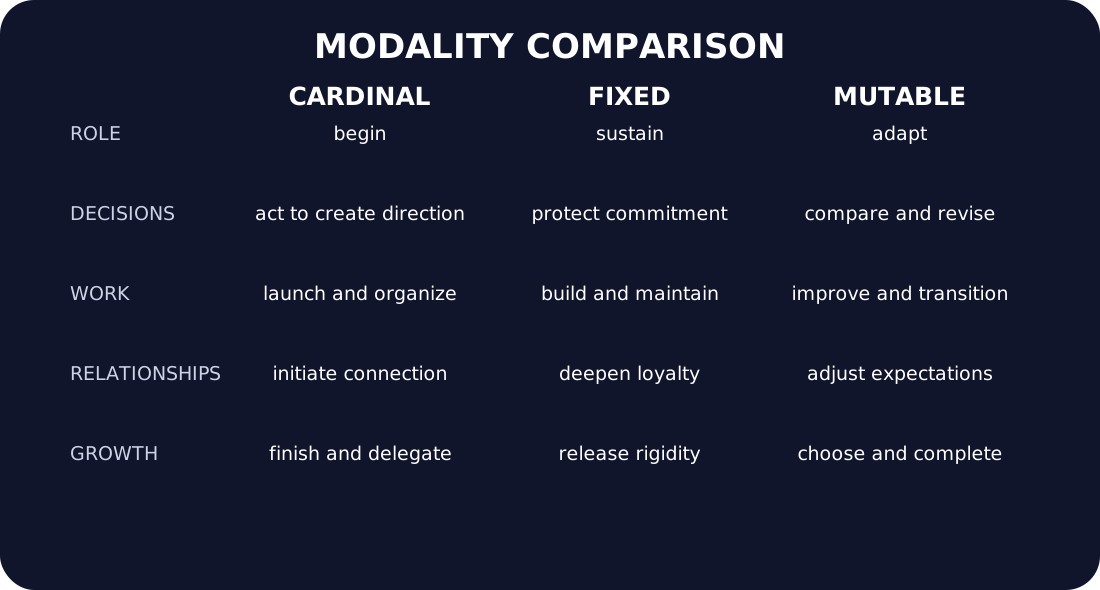
| Modality | Cycle role | Common strength | Common imbalance | Growth direction |
|---|---|---|---|---|
| Cardinal | Begins | Initiative | Starting without completing | Collaboration and follow-through |
| Fixed | Sustains | Persistence | Rigidity or resistance | Flexibility and release |
| Mutable | Adapts | Responsiveness | Fragmentation or indecision | Commitment and completion |
A modality describes a role, not a moral quality. The same pattern can become useful or unhelpful depending on context, maturity and the rest of a chart.
Modalities through the four seasons
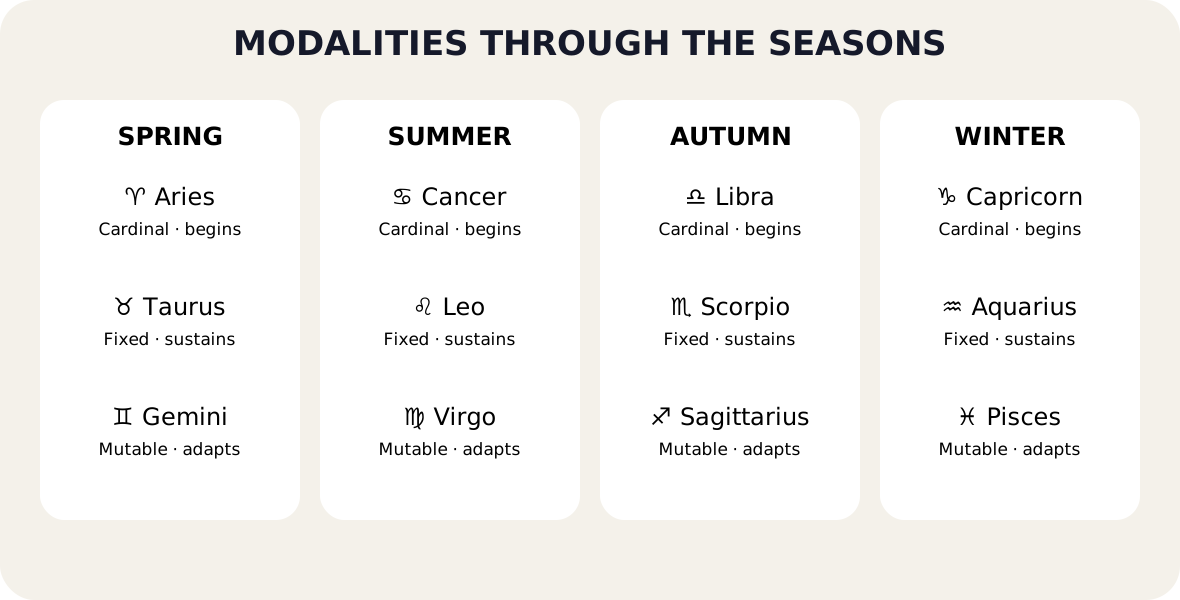
The order repeats four times around the tropical zodiac:
- Spring: Aries begins, Taurus sustains, Gemini transitions.
- Summer: Cancer begins, Leo sustains, Virgo transitions.
- Autumn: Libra begins, Scorpio sustains, Sagittarius transitions.
- Winter: Capricorn begins, Aquarius sustains, Pisces transitions.
This repeating structure explains why signs that seem very different can share a modality. Aries and Cancer do not share an element, but both begin a season. Leo and Scorpio differ in element, but both stabilize a seasonal middle.
Every element and modality combination
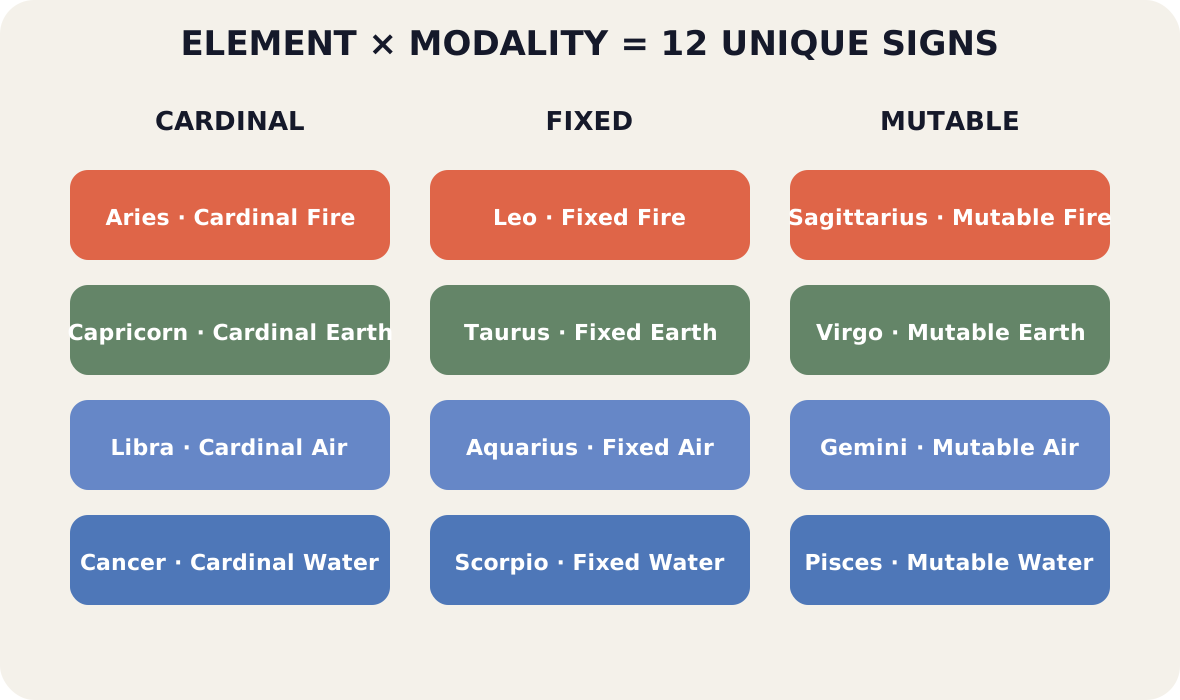
Four elements multiplied by three modalities produce twelve unique combinations. No two signs share both the same element and modality.
Use the complete Elements Hub alongside this page to understand the full structural formula.
How modalities appear in everyday life
Decision-making
Cardinal placements often prefer to establish direction, fixed placements protect an existing decision and mutable placements keep revising according to new information.
Work
Cardinal energy is useful during launches, fixed energy during development and maintenance, and mutable energy during improvement, handoff or change.
Communication
Cardinal communication may direct; fixed communication may emphasize consistency; mutable communication may explore several frames.
Learning
Cardinal learns by applying and initiating, fixed by repetition and depth, and mutable by comparison and variation.
Conflict
Cardinal may push for action, fixed may hold ground and mutable may reframe or postpone finality. Awareness of these rhythms can make disagreement easier to coordinate.
Modalities and relationship dynamics
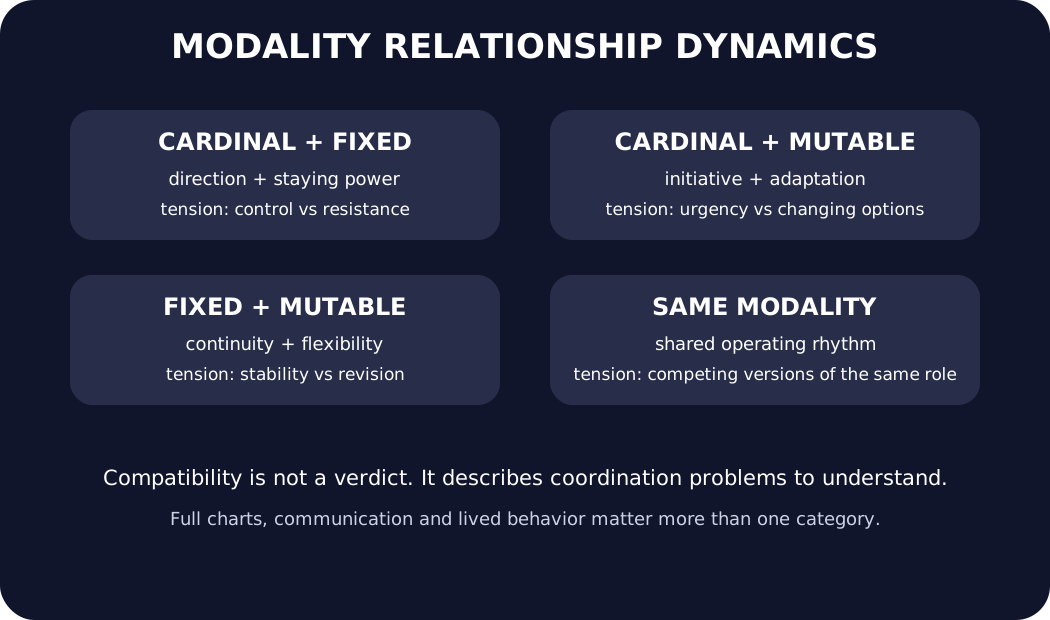
Modality compatibility is best treated as a coordination problem, not a verdict. Each pair brings a useful combination and a predictable tension.
- Cardinal + Fixed: direction and staying power; tension around control and resistance.
- Cardinal + Mutable: momentum and adaptation; tension around urgency and changing plans.
- Fixed + Mutable: continuity and flexibility; tension around stability and revision.
- Same modality: a shared rhythm, but possible competition to initiate, hold or adapt.
Actual relationships depend on full charts, communication, values, history and behavior. A modality cannot determine compatibility by itself.
Modality balance in a birth chart
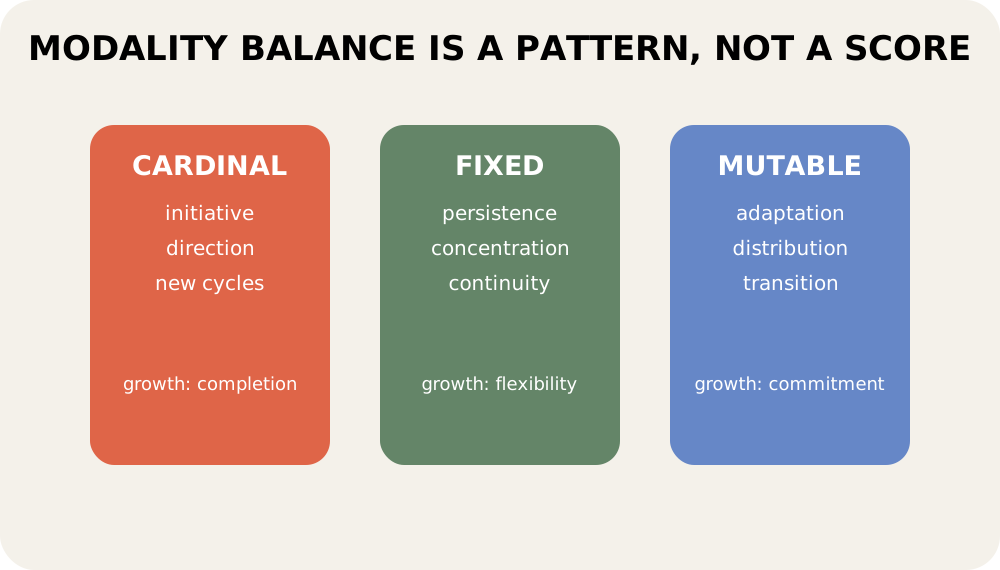
A person does not have only the modality of the Sun sign. Every planet and chart point occupies a sign, so a chart can contain a mixture of cardinal, fixed and mutable placements.
Some astrologers count planets by modality and give additional attention to the Sun, Moon, Ascendant or chart ruler. Methods differ, and a count should be treated as a starting observation rather than a psychological test.
Strong cardinal
May emphasize initiative and direction. Growth may involve completion and collaboration.
Strong fixed
May emphasize concentration and loyalty. Growth may involve flexibility and release.
Strong mutable
May emphasize adaptation and learning. Growth may involve limits and commitment.
Common modality myths
| Myth | More accurate explanation |
|---|---|
| Cardinal signs are natural bosses. | Cardinal symbolism emphasizes initiation, which can appear through leadership, care, social coordination or structure. |
| Fixed signs never change. | Fixed signs can change deeply, but may need a compelling reason and time to consolidate the change. |
| Mutable signs cannot commit. | Mutable energy adapts; commitment improves when priorities and boundaries are clear. |
| One modality is best. | Every sustainable process requires beginning, maintaining and adapting. |
| Your Sun-sign modality defines you. | A complete chart contains many placements and lived behavior cannot be reduced to one category. |
Astrology and evidence
The modality system is valuable as a way to understand the internal logic of tropical astrology and its historical symbolism. It should not be presented as proof that birth season causes a fixed behavioral type.
Zodiac Calendar separates measurable sky and seasonal facts from interpretive claims. This allows readers to study the tradition without confusing it with astronomy or modern psychological science.
Frequently asked questions
What are the three zodiac modalities?
Cardinal, fixed and mutable are the three modalities used to classify the twelve zodiac signs.
What does modality mean in astrology?
Modality describes how a sign operates within a cycle: by beginning, sustaining or adapting.
Which signs are cardinal signs?
Aries, Cancer, Libra and Capricorn are cardinal signs.
Which signs are fixed signs?
Taurus, Leo, Scorpio and Aquarius are fixed signs.
Which signs are mutable signs?
Gemini, Virgo, Sagittarius and Pisces are mutable signs.
Why are there three modalities?
The three-part pattern mirrors the beginning, middle and transition phase of each tropical season.
How do modalities differ from elements?
Elements describe symbolic type or field; modalities describe operating style.
Does every zodiac sign have one modality?
Yes. Each of the twelve signs belongs to exactly one modality.
What is a cardinal sign?
A cardinal sign begins a season and is traditionally associated with initiation and direction.
What is a fixed sign?
A fixed sign occupies the middle of a season and is associated with stabilization and persistence.
What is a mutable sign?
A mutable sign closes a season and is associated with adaptation, distribution and transition.
Is cardinal the strongest modality?
No. Each modality performs a different role and can be expressed constructively or unconstructively.
Are fixed signs always stubborn?
No. Persistence can become rigidity, but it can also produce loyalty, mastery and endurance.
Are mutable signs always indecisive?
No. Adaptability can become inconsistency, but it also supports learning and responsiveness.
Are cardinal signs always bossy?
No. Initiative can become control, but it can also create leadership and needed momentum.
Sources and further reading
- International Astronomical Union — The Constellations — scientific context for constellations as bounded sky regions.
- NASA — Plane of the Ecliptic — scientific context for the Sun’s apparent path and zodiacal coordinate framework.
- Zodiac Calendar Source Library — editorial method for separating astronomy, history and astrological interpretation.
- Zodiac Calendar Editorial Policy — evidence and interpretation standards used across this site.
Editorial note: Modalities are presented as an astrological and historical classification. They are not scientifically established causes of personality.