Cornerstone guide
The Planets in Astrology: The Definitive Guide
A complete visual guide to the Sun, Moon and planets in a birth chart—including rulership, dignity, retrograde motion, cycles, astronomy and the difference between planet, sign, house and aspect.
Planetary symbolism on this page describes astrological tradition. Astronomy claims such as retrograde motion are separated into sourced explanations in the Research Library.
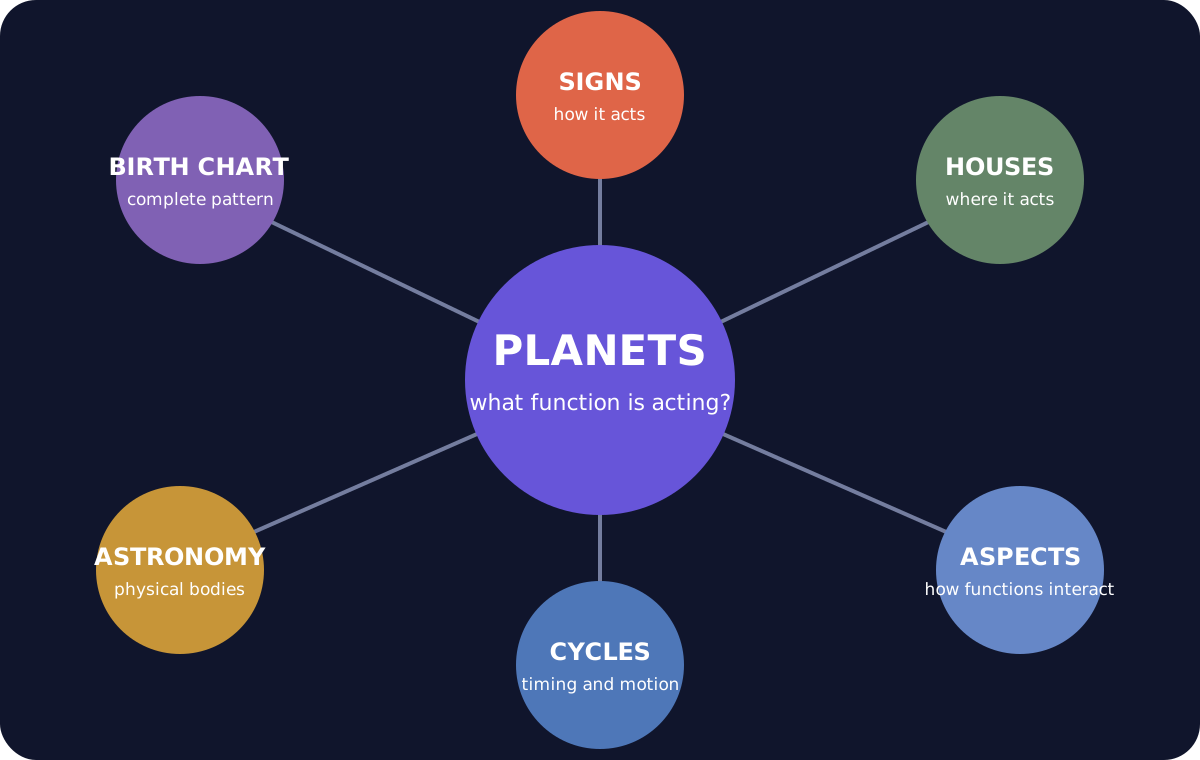
- Planets describe symbolic functions; they do not replace the whole birth chart.
- The Sun and Moon are luminaries, and Pluto is a dwarf planet astronomically.
- Traditional and modern rulership systems differ.
- Retrograde motion is apparent motion, not a planet reversing its orbit.
- Astrological planet meanings are historical interpretations, not scientifically validated personality forces.
What planets mean in astrology
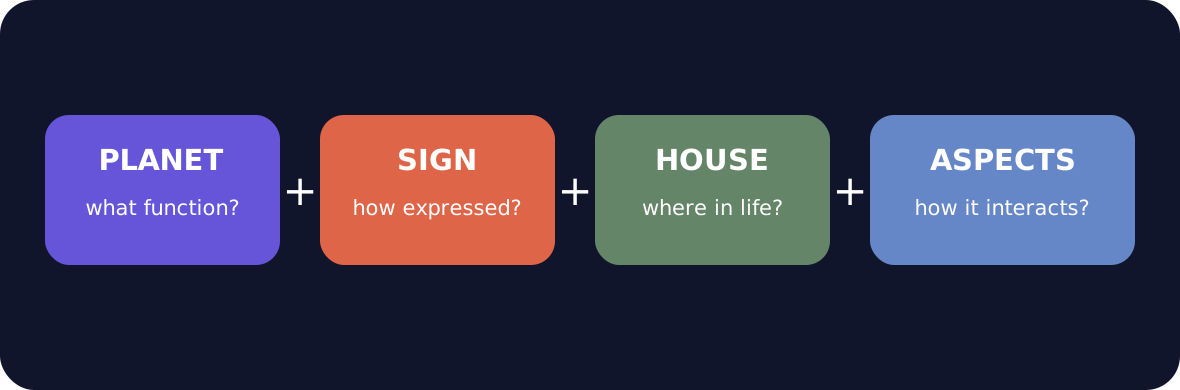
In astrology, a planet represents a symbolic function. It answers a different question from a sign or house. The Sun may symbolize identity, Mercury thinking, Venus value and Mars action. The sign describes the style through which that function is expressed, while the house describes the area of life where it operates.
This is why “planet in sign” interpretations are combinations rather than isolated labels. Mars in Aries and Mars in Libra both concern action, but the style differs. Venus in the 2nd house and Venus in the 10th house both concern value and attraction, but the life context differs.
The ten commonly used astrological bodies
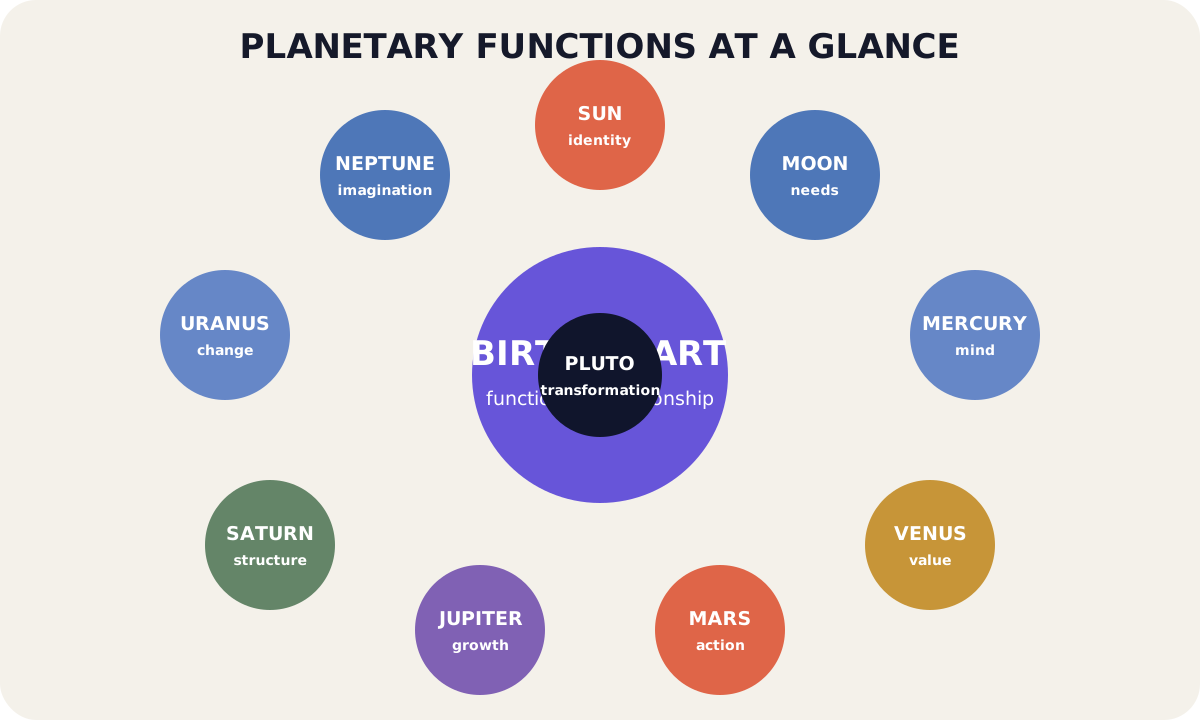
Sun
Identity, vitality, purpose and creative center.
Moon
Needs, memory, habits and emotional rhythm.
Mercury
Thinking, language, learning and exchange.
Venus
Value, attraction, pleasure and relationship.
Mars
Action, assertion, desire and conflict.
Jupiter
Growth, belief, education and opportunity.
Saturn
Limits, responsibility, structure and mastery.
Uranus
Change, disruption, invention and independence.
Neptune
Imagination, idealization, permeability and mystery.
Pluto
Power, exposure, transformation and renewal.
The Sun and Moon are not planets in modern astronomy. Astrology calls them luminaries and groups them with planets because all were observed as moving against the background stars from Earth. Pluto is a dwarf planet astronomically, but many modern astrologers continue to use it symbolically.
Luminaries, personal, social and outer planets
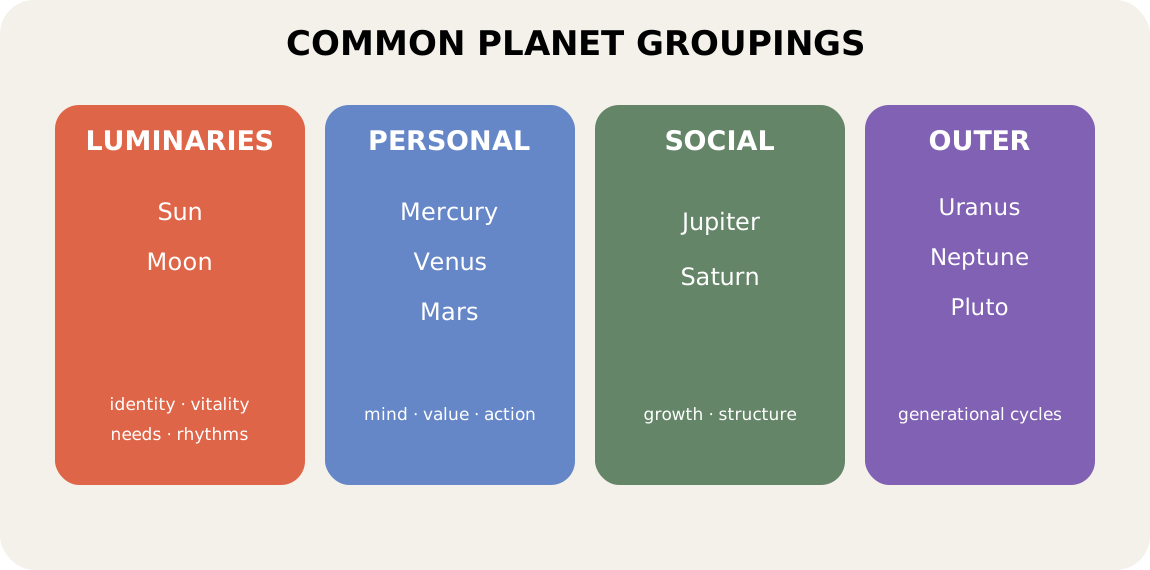
These groupings are teaching tools rather than universal laws. The luminaries describe central identity and emotional rhythm. Mercury, Venus and Mars move relatively quickly and are often tied to everyday expression. Jupiter and Saturn connect personal life with social systems and longer developmental cycles. Uranus, Neptune and Pluto move slowly and often describe generational patterns as well as individual placements.
Traditional and modern sign rulership
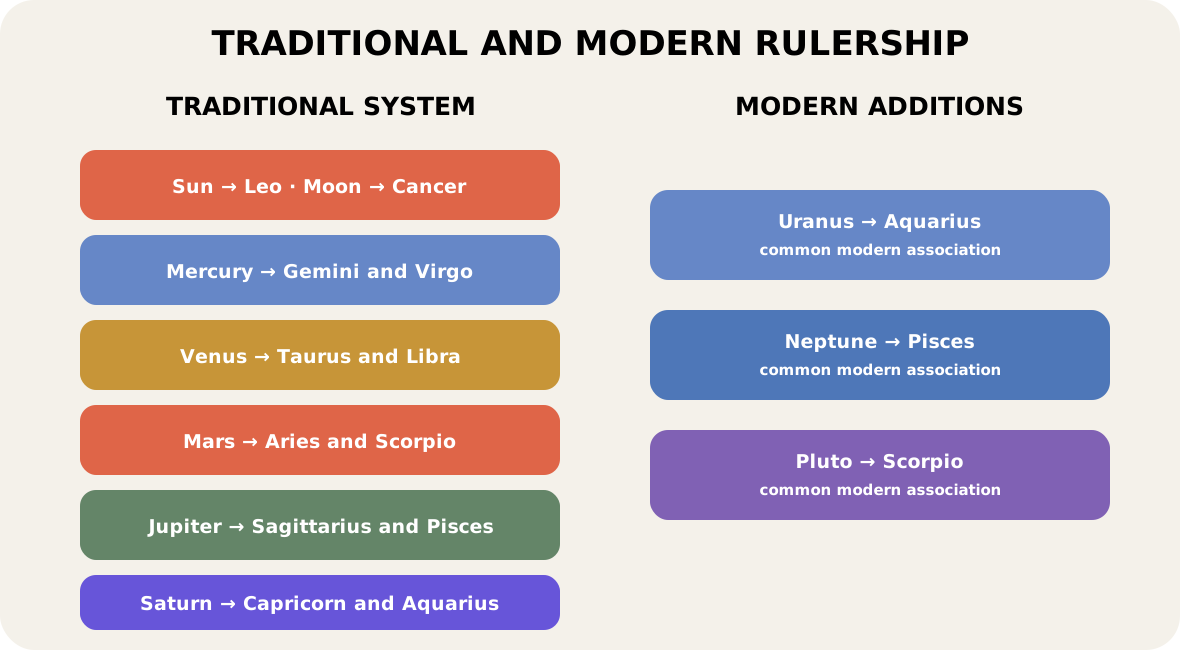
The traditional rulership system uses the seven visible wanderers known before telescopes: Sun, Moon, Mercury, Venus, Mars, Jupiter and Saturn. The signs are arranged symmetrically around the luminary signs of Cancer and Leo.
After Uranus, Neptune and Pluto were discovered, many modern astrologers associated them with Aquarius, Pisces and Scorpio. Traditional astrologers generally retain Saturn, Jupiter and Mars as the rulers of those signs. Zodiac Calendar presents both systems and identifies which framework is being used.
Planetary dignity and condition
Traditional astrology evaluates planets through frameworks such as domicile, exaltation, detriment and fall. A planet in domicile occupies a sign it rules. Exaltation describes a traditional position of special strength. Detriment and fall are opposite those positions.
Dignity is not a simple rating of good versus bad. A dignified planet can be strong but excessive; a planet in a difficult condition can become highly skilled through adaptation. Other conditions include sect, speed, visibility, retrograde motion, combustion and aspects.
| Condition | Basic meaning |
|---|---|
| Domicile | Planet is in a sign it traditionally rules. |
| Exaltation | Traditional position of elevated strength. |
| Detriment | Planet is opposite a domicile sign. |
| Fall | Planet is opposite its exaltation. |
| Retrograde | Planet appears to move backward from Earth. |
| Combust | Planet is very close to the Sun in traditional doctrine. |
Retrograde motion: astronomy and interpretation
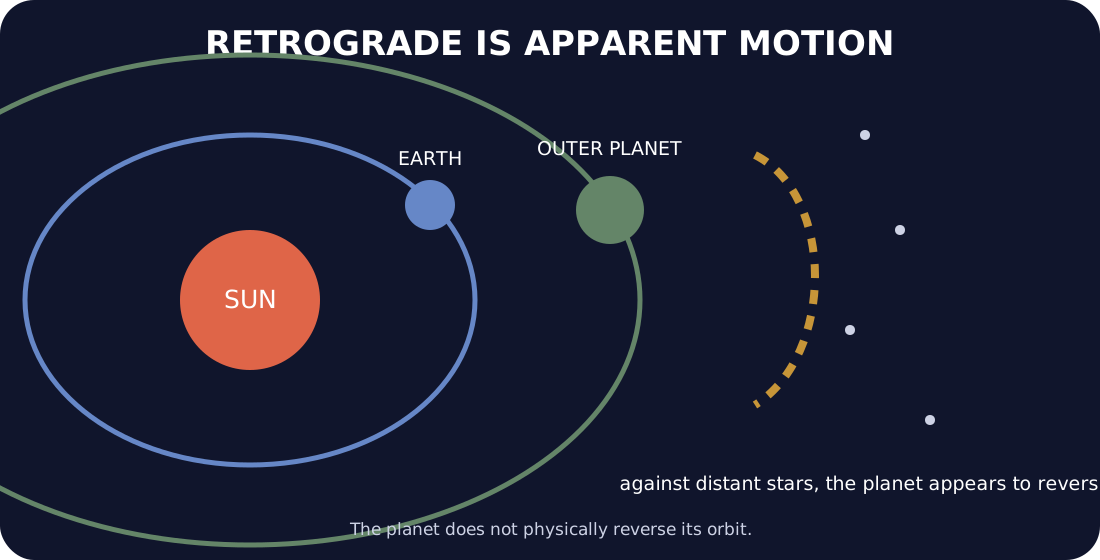
Retrograde motion is an apparent reversal against the distant stars. The planet does not physically reverse its orbit. For outer planets, the effect occurs when Earth overtakes the slower-moving planet. Inner planets have a different geometry but the backward appearance is still a matter of relative motion.
Astrologers interpret retrograde periods and natal retrograde placements in several ways, often emphasizing revision, internalization, repetition or nonstandard expression. Scientific evidence does not show that apparent retrograde motion causes communication failures, relationship problems or mechanical breakdowns.
Planetary cycles and returns
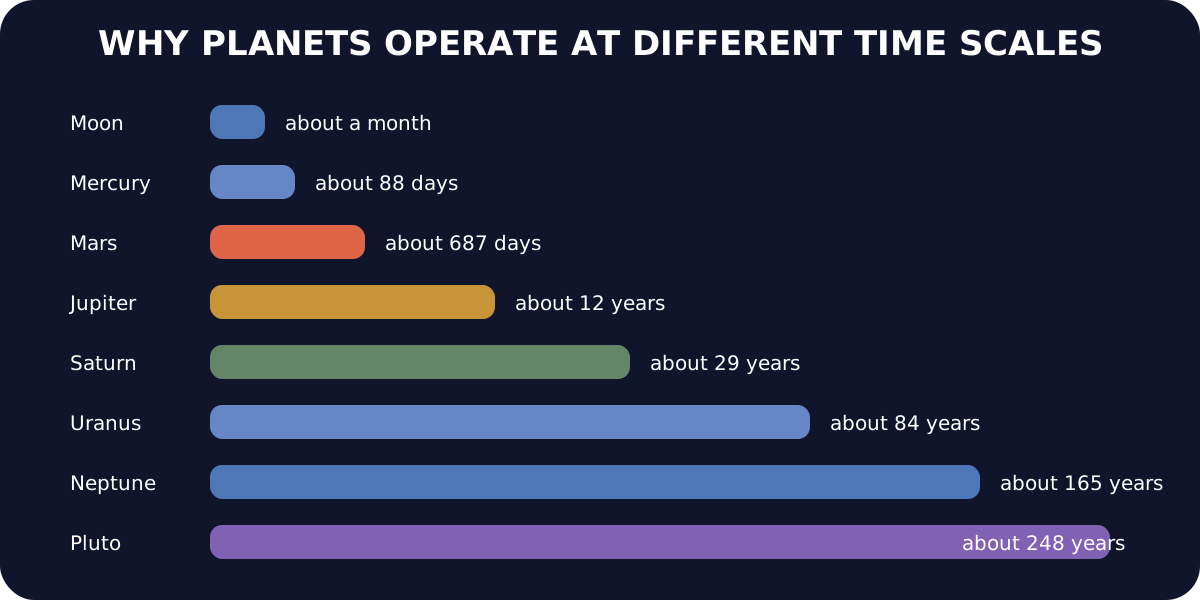
Faster bodies create short cycles; slower bodies create long ones. The Moon returns to its natal zodiac position roughly monthly, the Sun yearly, Jupiter about every twelve years and Saturn about every twenty-nine years. Uranus, Neptune and Pluto operate across decades or generations.
Astrology uses returns and transits as symbolic timing techniques. Astronomy provides the measurable orbital cycles; the interpretation of those cycles as personal meaning belongs to astrology.
How to read a planet in a birth chart
- Name the function. What does the planet symbolize?
- Read the sign. How is the function expressed?
- Read the house. Where in life is it emphasized?
- Read the aspects. Which other functions support or challenge it?
- Check condition. Is the planet retrograde, dignified, angular or close to the Sun?
- Return to the whole chart. No single placement should be interpreted alone.
Example: Mercury in Taurus in the 10th house may be read as communication and thinking expressed deliberately and practically in career or public life. An aspect from Uranus could add speed, disruption or originality. That is a layered interpretation, not a factual personality diagnosis.
Complete planet comparison
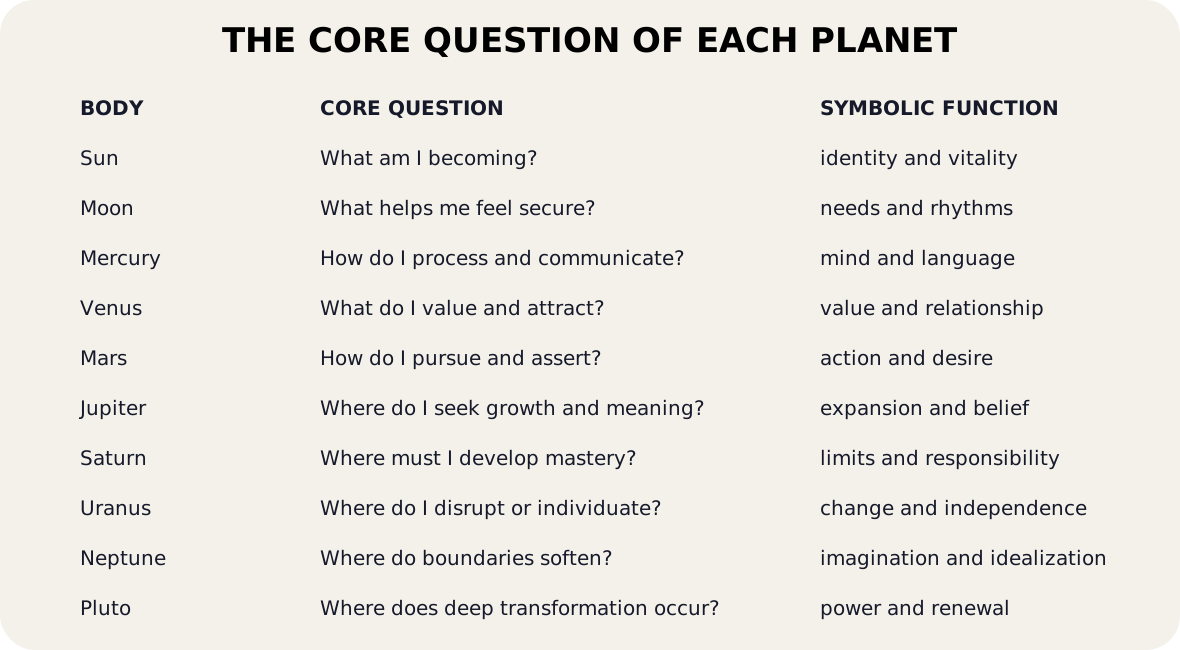
| Body | Common symbolic function | Traditional rulership |
|---|---|---|
| Sun | Identity, vitality, purpose | Leo |
| Moon | Needs, memory, emotional rhythm | Cancer |
| Mercury | Mind, language, learning | Gemini, Virgo |
| Venus | Value, attraction, relationship | Taurus, Libra |
| Mars | Action, assertion, desire | Aries, Scorpio |
| Jupiter | Growth, belief, meaning | Sagittarius, Pisces |
| Saturn | Limits, responsibility, mastery | Capricorn, Aquarius |
| Uranus | Disruption, invention, independence | Modern: Aquarius |
| Neptune | Imagination, idealization, permeability | Modern: Pisces |
| Pluto | Power, transformation, regeneration | Modern: Scorpio |
Astronomy versus astrological symbolism
NASA describes eight planets: Mercury, Venus, Earth, Mars, Jupiter, Saturn, Uranus and Neptune. The Moon orbits Earth and the Sun is the star at the center of the solar system. The International Astronomical Union’s 2006 definition reclassified Pluto as a dwarf planet.
Those astronomical facts do not invalidate the study of astrological history, but they set a clear boundary. Planetary personality meanings, rulerships, dignities and transit interpretations are not scientifically demonstrated causal effects.
Frequently asked questions
What do planets represent in astrology?
Planets represent symbolic functions or drives. Signs describe how those functions are expressed, houses describe where they operate, and aspects describe how they interact.
Why are the Sun and Moon called planets in astrology?
Astrology preserves an older geocentric classification in which the Sun and Moon are treated as moving celestial factors, often called luminaries.
How many planets are used in modern astrology?
Many modern Western astrologers use the Sun, Moon, Mercury, Venus, Mars, Jupiter, Saturn, Uranus, Neptune and Pluto.
How many planets are used in traditional astrology?
Traditional Western systems generally use seven visible wanderers: Sun, Moon, Mercury, Venus, Mars, Jupiter and Saturn.
Is Pluto a planet in astronomy?
No. The International Astronomical Union classifies Pluto as a dwarf planet.
Can Pluto still be used in astrology?
Yes. Astrological classification is symbolic and does not have to match current astronomical categories.
What is a ruling planet?
A ruling planet is a planet traditionally or modernly associated with a zodiac sign.
What is a chart ruler?
The chart ruler is usually the planet ruling the Ascendant sign.
What is a personal planet?
Mercury, Venus and Mars are commonly called personal planets because their cycles are relatively fast and their symbolism is closely tied to everyday behavior.
Are the Sun and Moon personal planets?
They are usually called luminaries, but they are often discussed alongside the personal planets.
What are social planets?
Jupiter and Saturn are commonly called social planets because their symbolism concerns growth, law, structure and participation in society.
What are outer planets?
Uranus, Neptune and Pluto are commonly called outer or transpersonal planets.
Why are outer planets called generational?
They move slowly and remain in one zodiac sign for years, so large groups of people share the same sign placement.
What does the Sun represent?
The Sun traditionally symbolizes identity, vitality, purpose and the organizing center of a chart.
What does the Moon represent?
The Moon traditionally symbolizes needs, memory, habits, emotional rhythms and security.
Sources and further reading
- NASA — About the Planets — eight planets, terrestrial planets, giant planets and dwarf planets.
- NASA — Moon Facts — Earth’s natural satellite, orbit, rotation and physical characteristics.
- NASA — What Is a Planet? — the historical and modern development of planet definitions.
- International Astronomical Union — 2006 Planet Definition — formal classification of planets and dwarf planets.
- NASA APOD — Retrograde Motion — visual explanation of apparent backward motion.
- Zodiac Calendar Source Library — how we choose and use sources.
Editorial note: This guide separates measurable astronomy from historical astrological symbolism. Planetary meanings are interpretive and are not scientifically proven causes of personality or events.