Zodiac Calendar Guide
Sun, Moon and Rising Signs: The “Big Three”
The big three at a glance
| Placement | Traditional focus | What determines it |
|---|---|---|
| Sun sign | Identity, vitality, direction | Birth date and exact solar position |
| Moon sign | Emotional habits, needs, instinct | Date, time and lunar position |
| Rising sign | Approach, first impression, chart orientation | Exact time and location |
The Sun sign
The Sun sign is the most familiar placement because it changes roughly once a month. Traditional astrology associates it with vitality, identity, purpose and the way a person develops a coherent sense of self.
The Moon sign
The Moon moves much faster than the Sun and changes signs about every two to three days. It is traditionally linked with emotional rhythms, familiarity, comfort, memory and automatic responses.
The rising sign
The rising sign, or ascendant, is the zodiac sign appearing on the eastern horizon at the recorded birth time. It changes approximately every two hours, although the rate varies by latitude and sign.
Why exact birth time matters
A small time error may not change the Sun sign, but it can change the ascendant degree and house cusps. A chart without a reliable birth time should avoid false precision about houses and the rising sign.
How to combine the three
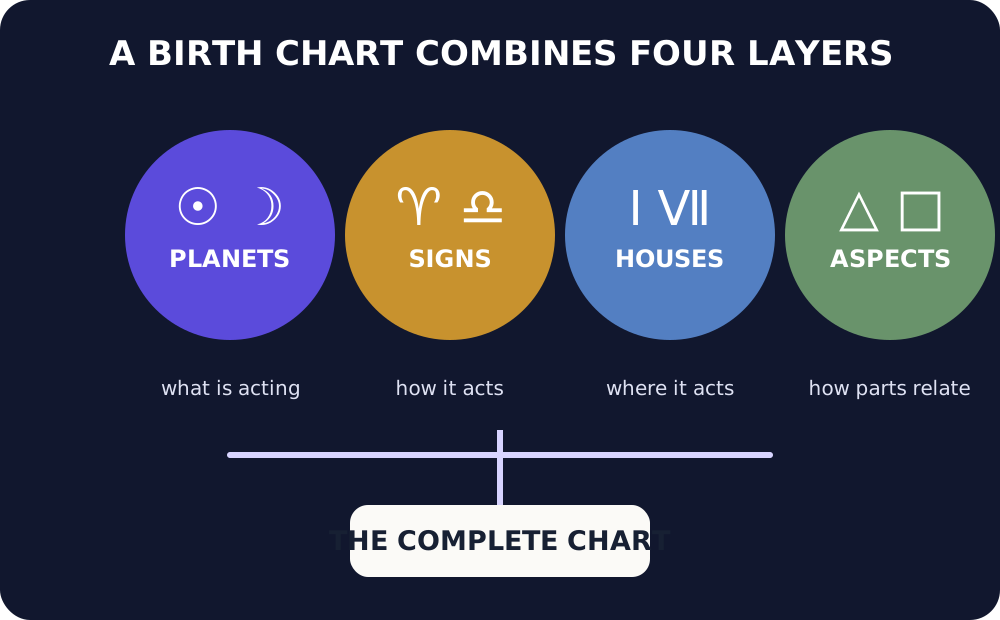
Read the placements as different layers rather than forcing them into one label. A person may identify with the Sun’s goals, experience the Moon’s emotional style privately, and meet the world through the rising sign’s approach.
Common mistake: treating one placement as the whole person
No single placement summarizes an entire chart. Astrology itself is a multi-factor system, and responsible interpretation avoids deterministic claims.
Continue learning
Birth chart fundamentals · Zodiac dates · Glossary
Editorial note: Astrological meanings on this page describe traditions and interpretive frameworks. They are not presented as scientifically established personality facts or predictions.